
Texas Security Deposit Rules, Normal Wear and Tear vs. Damage: A Turnover Guide for San Antonio Investors and Agents
Whether it’s your rental or a client’s, the moment a tenant hands back the keys, a clock starts running. In Texas, the security deposit rules sit in Chapter 92 of the Property Code. They are fairly short, and in practice they often come down to one question: can you prove what happened to the property?
This guide is for San Antonio investors with rentals and for agents who lease or manage rentals for clients. It covers what the law actually says, where owners get tripped up, and how a well-documented make-ready protects your deposit decisions.
If you’re an agent, this matters for more than the owner’s wallet. A deposit dispute that drags on, or a unit that sits half-finished, lands on you: it strains the client relationship and pushes back the next lease. A clean, documented turnover keeps your client happy and gets the rental back on the market faster.
General information, not legal advice; laws change, so confirm with a Texas attorney or the current statute. 4 Way Contractors is a make-ready contractor, not a law firm. See the full disclaimer at the end, and talk to a licensed Texas attorney about your specific situation.
The 30-day deadline
Under Texas Property Code § 92.103, the landlord has to refund the security deposit on or before the 30th day after the tenant surrenders the premises. If you’re keeping any part of it, § 92.104(c) says you have to send the balance along with a written description and an itemized list of every deduction.
There are a few details worth knowing:
- Forwarding address. You don’t have to return the deposit or send the list until the tenant gives you a forwarding address in writing (§ 92.107). Not giving one doesn’t make them lose the deposit, though.
- Mail counts. If the refund or accounting is postmarked on or before the deadline, it’s presumed on time (§ 92.1041).
- Selling the property? A new owner becomes responsible for returning deposits from the date title transfers (§ 92.105). Investors buying occupied rentals should ask about this at closing.
Thirty days sounds like plenty. But if the house needs a full turn, you want the work, the photos and the list of charges done well before day 30 (§ 92.103).
What counts as normal wear and tear in Texas
This is where most deposit disputes start. Under § 92.104(b), the landlord may not keep any portion of the deposit to cover normal wear and tear. Under § 92.104(a), deductions are limited to damages and charges the tenant is legally liable for under the lease or because of breaching it.
§ 92.001(4) defines normal wear and tear as deterioration that results from the intended use of the home. (The same definition adds breakage or malfunction due to age, but only for the repair and security device subchapters, not the deposit subchapter.) It does not include damage from negligence, carelessness, accident or abuse by the tenant, their household or their guests.
Here’s how that tends to play out on San Antonio turns:
| Usually normal wear and tear | Usually tenant damage |
|—|—|
| Light scuffs and faded paint after years of living | Holes in drywall, crayon or marker on walls |
| Carpet worn flat in walkways | Pet urine stains, burns, large tears |
| Small nail holes from hanging pictures | Broken doors, blinds or windows |
| Grout dulled by age | Cracked tile from something being dropped |
| Appliance that quit from age | Appliance broken by misuse |
The table is a general illustration, not a legal rule. Every situation depends on the facts and the lease, like how long the tenant lived there and the condition when they moved in. That’s why documenting it matters more than any chart.
Why proof matters: who carries the burden
Under § 92.109(c), if a tenant sues over the deposit, the landlord has the burden of proving that what you kept was reasonable.
The stakes are real. A landlord who keeps a deposit in bad faith can owe three times the amount wrongly kept, plus $100 and the tenant’s reasonable attorney’s fees (§ 92.109(a)). A landlord who doesn’t send the itemized list in bad faith loses the right to keep any of the deposit, and the right to sue the tenant for damage to the property (§ 92.109(b)). Miss the 30-day deadline, and the law presumes bad faith, though that presumption can be rebutted (§ 92.109(d)).
So when a tenant says “that was already there,” the person with clear, dated photos and a written condition report is usually in a much better position.
Move-out to move-in compliance checklist
Chapter 92 also lists security and safety items for the next tenancy. For agents: the security device subchapter defines “landlord” to include a management company or managing agent (§ 92.151(7)), so these items may matter to you directly, not just to your client. A good make-ready turnover keeps these on the owner’s list while the house is empty:
- Rekey within seven days of move-in. Every lock that works with a key, card or combination has to be rekeyed at the landlord’s expense within seven days after the new tenant moves in (§ 92.156, with the “tenant turnover date” defined in 92.151(15)). For keypad and card locks, that means a new code or card. Many owners simply rekey before the new tenant gets the keys.
- Exterior doors. Each one needs a doorknob lock or keyed deadbolt, plus a keyless bolting device (the kind you can only work from inside) and a door viewer. The door between the house and the garage counts as an exterior door. A peephole or a clear glass pane works as a viewer (§ 92.151(2), 92.151(3), 92.153(a)). A thumb-turn deadbolt, a properly anchored drop bolt or a metal door bar can serve as the keyless bolting device. A chain latch or flip latch can’t (§ 92.151(6)). Some exceptions apply, for example for certain tenants over 55 or with disabilities (§ 92.153(e)-(g)).
- Sliding glass doors. These need a pin lock, plus either a handle latch or a security bar (§ 92.153(a)(3)-(4)).
- Windows. Every exterior window needs a latch (§ 92.153(a)(1)).
- French doors. One leaf gets the normal locks. The other gets bolts into the top of the frame and into the floor or threshold (§ 92.153(b)).
- Smoke alarms. There must be at least one in each bedroom, one in the hallway near bedrooms that share it, and one on each level (§ 92.255(a)). The landlord has to confirm each one works at the beginning of the tenant’s possession, by testing with smoke, pressing the test button or following the manufacturer’s procedure (§ 92.258(b)).
- Health and safety repairs. During a lease, once a tenant who is current on rent gives notice, the landlord has to make a diligent effort to fix conditions that materially affect an ordinary tenant’s health or safety (§ 92.052(a)). Starting the lease with your rental in solid shape cuts down on those calls.
If required security devices are missing or locks aren’t rekeyed, § 92.164 gives the tenant remedies. Depending on the situation and the lease, a tenant may install or rekey and deduct the cost from rent, end the lease if a written request isn’t met within three days (seven days if the lease has the required bold or underlined notice), or sue. Smoke alarms and repairs have their own remedy sections. It’s usually easier to catch these items during the turn. On our make-readies, we check these items and fix what’s needed (locks and rekeying, keyed and keyless deadbolts, door viewers, window and patio door latches and pin locks, and smoke alarms) to help get the house ready for the next tenant. Making sure the property meets the law is still the owner’s or manager’s call.
A simple move-out checklist for San Antonio rentals
- Get the tenant’s forwarding address in writing (§ 92.107).
- Walk the property the day you get the keys. Take photos of every room, wall, floor, fixture and appliance.
- Pull out your move-in photos or inspection report and compare.
- Sort every issue into one of two columns: normal wear and tear, or tenant damage.
- Go through the compliance checklist above (locks, viewers, latches, smoke alarms) before the next tenant moves in.
- Get the make-ready done so the house can be listed or re-leased.
- Send the refund and the itemized deductions before day 30 (§ 92.103, § 92.104(c)), and keep copies.
Steps two and six are where most owners run out of time, and our photos and report can help with step four. The deposit decisions themselves stay with you.
How 4 Way Contractors helps at move-out
We’re a San Antonio make-ready contractor working with landlords, investors and agents. Once a property is fully vacant, we walk it with you and give you one firm price for the whole job. Then we take care of cleaning, paint, drywall, flooring, repairs and yard work, all coordinated through the final walkthrough.
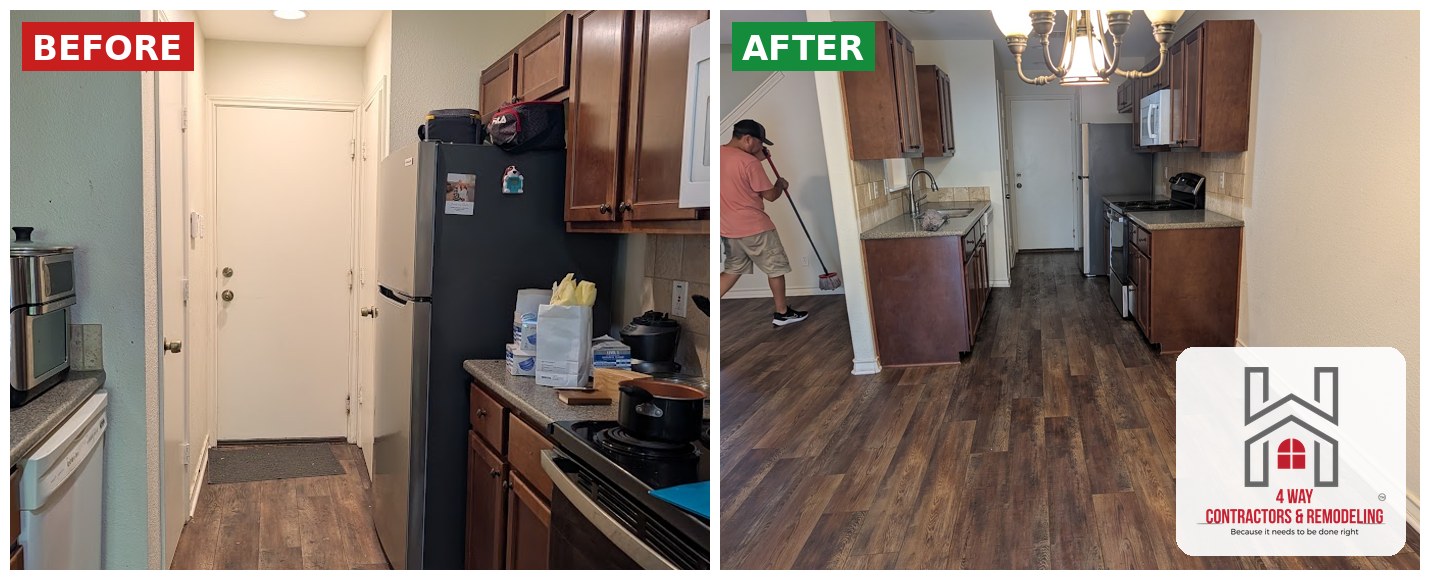
Every job also comes with something most contractors don’t offer: complimentary before and after photos, plus a report with our opinion of what may be chargeable to the tenant as damage and what is generally normal wear and tear. You get the photos and report once the job is complete and paid. They’re meant to help you put together the written, itemized list § 92.104 calls for. The report is our contractor’s opinion of condition, not a legal determination, so review it and make the final call yourself.
The goal is a rent-ready house and documentation that helps support your deposit decisions. Plan the timing early, since the 30-day clock in § 92.103 is yours to manage.
See our make-ready services for investors or our full make-ready services in San Antonio.
FAQ
How long does a Texas landlord have to return a security deposit?
Under § 92.103, on or before the 30th day after the tenant surrenders the premises. Under § 92.107, the landlord doesn’t have to send it until the tenant gives a written forwarding address.
Can I charge for carpet cleaning or painting?
Generally only for damage beyond normal wear and tear, or for charges the tenant is legally liable for under the lease (§ 92.104). Paint that faded from normal use is typically wear and tear. Paint damaged by carelessness or abuse may be chargeable. Ask an attorney about your lease language.
Do I have to rekey between tenants?
Yes. Under § 92.156(a), locks operated by a key, card or combination must be rekeyed at the landlord’s expense no later than the seventh day after each tenant turnover date. Interior and closet door locks are excluded (§ 92.156(d)). The landlord can deduct rekeying from a deposit only in limited cases spelled out in § 92.156(e).
What if I don’t have move-in photos?
Then your move-out photos and a detailed report generally matter even more. Talk to your attorney about how to handle a dispute without them. Start documenting at every turnover from now on.
Related: Make-ready services in San Antonio · Make-ready for investors · Contact us
Book a walkthrough
Just got the keys back? Call 4 Way Contractors at (210) 361-1101 to schedule a walkthrough. We’ll walk it, give you one flat price for the job, check the locks, latches and smoke alarms on the checklist above, and once the job is complete and paid, hand you photos and a damage vs. wear-and-tear report you can use.
References
- Texas Property Code § 92.001, Definitions (normal wear and tear): https://statutes.capitol.texas.gov/Docs/PR/htm/PR.92.htm#92.001
- § 92.052, Landlord’s duty to repair: https://statutes.capitol.texas.gov/Docs/PR/htm/PR.92.htm#92.052
- § 92.103, Obligation to refund (30 days): https://statutes.capitol.texas.gov/Docs/PR/htm/PR.92.htm#92.103
- § 92.104, Retention of deposit; accounting; normal wear and tear: https://statutes.capitol.texas.gov/Docs/PR/htm/PR.92.htm#92.104
- § 92.1041, Presumption of refund by mail: https://statutes.capitol.texas.gov/Docs/PR/htm/PR.92.htm#92.1041
- § 92.105, New owner’s liability for deposits: https://statutes.capitol.texas.gov/Docs/PR/htm/PR.92.htm#92.105
- § 92.107, Tenant’s forwarding address: https://statutes.capitol.texas.gov/Docs/PR/htm/PR.92.htm#92.107
- § 92.109, Liability of landlord; burden of proof: https://statutes.capitol.texas.gov/Docs/PR/htm/PR.92.htm#92.109
- § 92.151, Security device definitions: https://statutes.capitol.texas.gov/Docs/PR/htm/PR.92.htm#92.151
- § 92.153, Required security devices: https://statutes.capitol.texas.gov/Docs/PR/htm/PR.92.htm#92.153
- § 92.156, Rekeying: https://statutes.capitol.texas.gov/Docs/PR/htm/PR.92.htm#92.156
- § 92.164, Tenant remedies for security devices: https://statutes.capitol.texas.gov/Docs/PR/htm/PR.92.htm#92.164
- § 92.255, Smoke alarm installation and location: https://statutes.capitol.texas.gov/Docs/PR/htm/PR.92.htm#92.255
- § 92.258, Smoke alarm inspection and repair: https://statutes.capitol.texas.gov/Docs/PR/htm/PR.92.htm#92.258
Disclaimer
This article is for general information only and is not legal advice. 4 Way Contractors is a make-ready and repair contractor. We are not a law firm and not attorneys, and reading this article or contacting us does not create an attorney-client relationship. Laws change, and your obligations can depend on your lease, your property and local rules, so check the current text of the Texas Property Code before relying on anything here. Before acting, talk to a licensed Texas attorney or your property manager. 4 Way Contractors makes no warranty that this information is accurate, complete or current, and is not liable for any action taken or not taken based on it. Any work 4 Way Contractors performs is limited to the written scope agreed for that job and does not guarantee legal compliance or any security deposit outcome. Our photos and condition report reflect our contractor’s opinion, not a legal determination.
Free guide
Get Your Vacant House Ready to Sell or Rent by Spring
What to fix first, what to skip, and a simple winter timeline. 8 pages, free.
Get the Free GuideRecent Posts
We Handle It All So You Don’t Have To.
Call (210) 361-1101 or request a free property walkthrough. We serve property owners, investors, Realtors, listing agents and military families across the greater San Antonio metro area.