What Does a Texas Landlord Need to Fix Before a New Tenant Moves In?
Short answer: Under Chapter 92 of the Texas Property Code, a landlord must rekey every key, card or combination lock no later than the seventh day after each tenant turnover, and the home must have window latches, a doorknob lock or keyed deadbolt, a keyless bolting device and a door viewer on each exterior door, and a pin lock plus a handle latch or security bar on each sliding glass door. The landlord must also have a smoke alarm in each bedroom, in the hallway serving the bedrooms, and on each level, and test it when the tenant takes possession.
Those are the legal minimums. A turnover that rents fast and avoids repair calls usually covers more than that. Below is a checklist by area, with every legal point linked to the exact section of the statute.
Not legal advice. We are a make-ready contractor, not lawyers. This article is information we researched from the public text of the Texas Property Code on statutes.capitol.texas.gov. Laws change and every property is different, so talk to a Texas real estate attorney about your situation. Local city codes and your HOA may add requirements.
The Texas move-in checklist, area by area
1. Locks and rekeying
- Rekey within 7 days. Every security device operated by a key, card or combination must be rekeyed at the landlord’s expense no later than the seventh day after each tenant turnover date. The “tenant turnover date” is the date a tenant moves in under a lease after all previous occupants have moved out.
- Interior doors are not included. The rekey rule does not apply to closet doors or other interior doors.
- Master keys. Rekeying tied to the landlord’s master key is paid by the landlord.
- Practical tip: Rekey before move-in day, not after. Doing it during the make-ready means the new tenant gets fresh keys at the walkthrough and you have it documented.
2. Exterior doors
The law requires, without the tenant having to ask, on each exterior door:
- A doorknob lock or a keyed deadbolt. (There are limited exceptions, for example when one main entry door already has both a keyed deadbolt and a keyless bolting device.)
- A keyless bolting device. That is a lock operated only from the inside, by knob or lever, and not from the outside in any manner, often called a keyless deadbolt. A chain latch does not count.
- A door viewer. A peephole with at least a 160-degree view, or a clear glass pane or one-way mirror.
- The garage door counts. “Exterior door” includes a door between the living area and a garage.
- Height and throw. Deadbolts and keyless bolting devices must be installed no lower than 36 inches and, for installs on or after Sept. 1, 1993, no higher than 48 inches from the floor; newer deadbolts need at least a one-inch throw.
- Landlord pays. Required devices are installed at the landlord’s expense.
French doors: one door of each pair must meet the rules above, and the other door needs top and bottom bolts into the jamb and the floor or threshold, with the throw lengths the statute lists.
3. Sliding glass doors
Each exterior sliding glass door needs a sliding door pin lock, plus either a handle latch or a sliding door security bar (the bar many people call a Charley bar). For installs on or after Sept. 1, 1993, the pin lock or security bar must sit no higher than 48 inches from the floor.
Practical tip: Check that the door actually slides and seals. A pin lock does little good on a door that jumps its track.
4. Windows
Each exterior window needs a window latch. During the make-ready we also look for cracked panes, broken balances, and torn or missing screens, since those are common move-in complaints.
5. Smoke alarms
- Where: at least one in each separate bedroom; one in the corridor near the bedrooms when several bedrooms share it; and at least one on each level. In a studio, the alarm goes inside the room.
- Older homes: If the unit was occupied or had a certificate of occupancy before Sept. 1, 2011, alarms may be battery powered and do not have to be interconnected, but replacements of original alarms must follow the code that applied when the home was first occupied.
- Mounting: On the ceiling at least six inches from a wall, or on a wall six to 12 inches from the ceiling, unless the manufacturer’s instructions say otherwise.
- Test at move-in. The landlord must confirm each alarm works at the beginning of the tenant’s possession, by smoke, the test button, or the manufacturer’s test procedure. After that, the landlord is not obligated to supply batteries if the alarm worked at move-in.
- Practical tip: Write the test date on your move-in checklist and have the tenant initial it.
6. Repairs that affect health and safety
Texas law requires a landlord to make a diligent effort to repair a condition that materially affects the physical health or safety of an ordinary tenant once the tenant gives notice and is current on rent. The same section covers hot water of at least 120 degrees Fahrenheit. If a landlord fails to repair, a court can order repairs, reduce rent, and award a civil penalty of one month’s rent plus $500, actual damages and attorney’s fees.
That duty kicks in after notice, but the smart move is to find those problems before the keys change hands. In a make-ready walkthrough we check:
- Water heater, leaks under sinks, toilets that run or rock
- Electrical outlets, switches, light fixtures and missing cover plates
- HVAC operation and filters
- Soft spots in floors, water stains on ceilings, damaged drywall
- Doors that stick, broken hardware, damaged trim
- Paint, flooring and a deep clean so the home shows well
Fixing these up front costs real money, and doing it right is an investment in the property. It is still far less disruptive than a repair call two weeks into a new lease.
Security deposits and normal wear and tear
- Refund within 30 days. The landlord must refund the deposit, minus lawful deductions, on or before the 30th day after the tenant surrenders the premises.
- No deductions for normal wear and tear. The landlord may not retain any portion of a security deposit to cover normal wear and tear, and must give the tenant a written list of deductions for damages and charges.
- Bad faith is costly. A landlord who acts in bad faith in keeping a deposit or in not giving the written description can be liable for $100, three times the wrongfully withheld amount, and attorney’s fees.
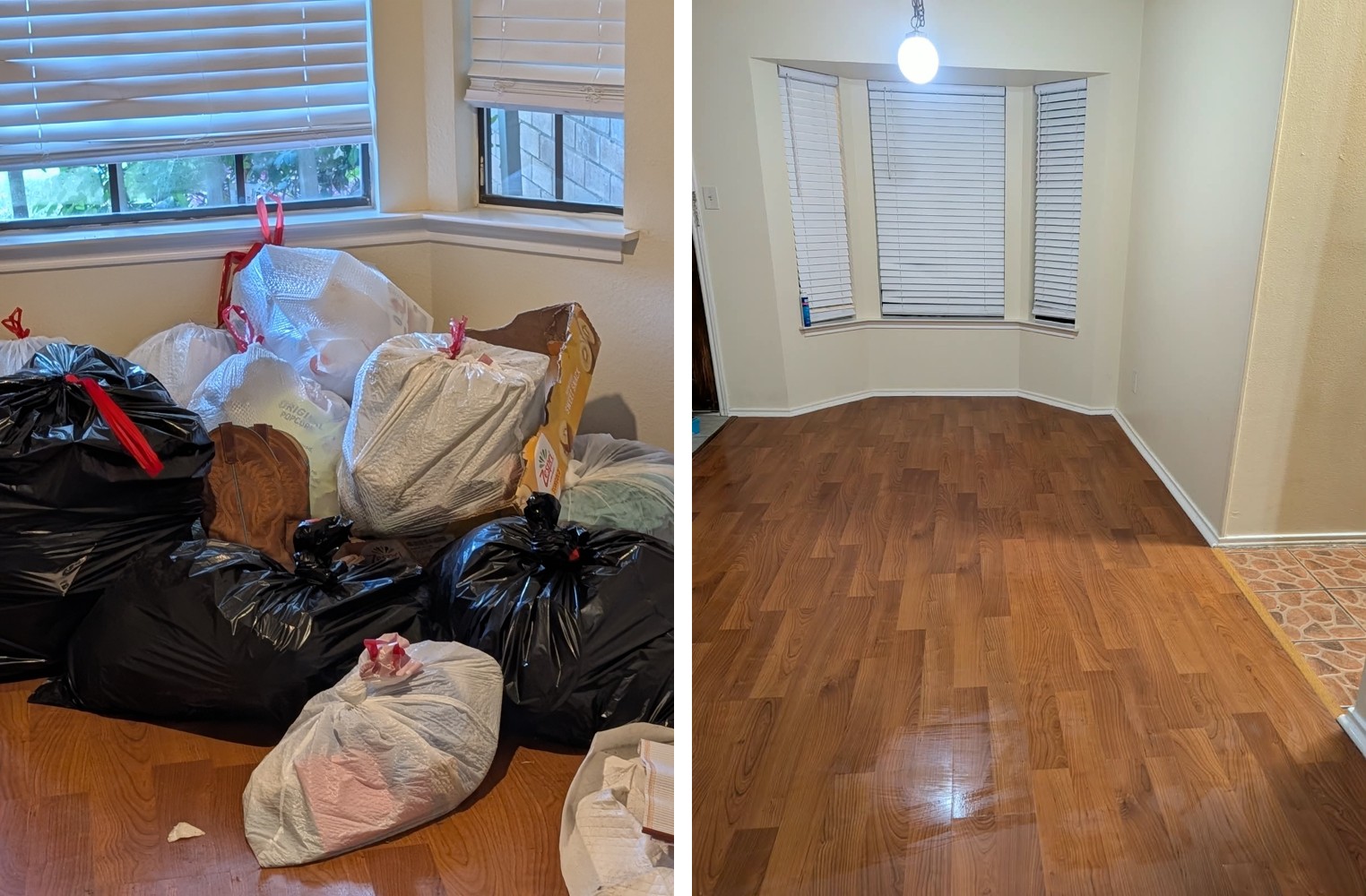
Why this matters at turnover: the move-in photos and condition record you make now are what let you tell normal wear and tear from damage when this tenant moves out. We take dated before and after photos on every make-ready.
Document everything
Take dated photos of every room, each lock and each smoke alarm before the tenant moves in. Good records help when a deposit dispute comes up at move-out. Our guide to Texas security deposits and normal wear and tear explains why.
FAQ
How soon after move-in does a Texas landlord have to rekey?
No later than the seventh day after each tenant turnover date, at the landlord’s expense. Many landlords rekey before move-in so it is done and documented.
Is a deadbolt required on every exterior door in Texas?
Each exterior door needs a doorknob lock or keyed deadbolt, plus a keyless bolting device and a door viewer. A tenant can also request a keyed deadbolt at the tenant’s expense if a door has only a doorknob lock.
Does the door from the house to the garage count as an exterior door?
Yes. The statute’s definition of exterior door includes a door between a living area and a garage.
Where do smoke alarms go in a Texas rental?
In each bedroom, in the corridor serving multiple bedrooms, and on each level, tested when the tenant takes possession.
Do I have to replace smoke alarm batteries during the lease?
Not if the alarm was in good working order when the tenant took possession. You still must inspect and repair it if the tenant reports a malfunction.
Can a city have stricter rules?
Yes. The smoke alarm subchapter does not prevent local fire, building or housing codes. Check your city’s code and talk to an attorney.
Get your rental move-in ready in San Antonio
4 Way Contractors & Remodeling handles make-ready in San Antonio and more than 10 surrounding counties for investors, landlords and real estate agents. We walk the property, flag the security devices, smoke alarms and repairs that need attention, and give you one firm price after the in-person walkthrough.
Call or text (210) 361-1101 for a free make-ready walkthrough and advice on what your property needs before the next tenant moves in.
Information current as of November 2026, researched from the Texas Property Code, Chapter 92. This is not legal advice. Consult a Texas attorney for your situation.
Free guide
Get Your Vacant House Ready to Sell or Rent by Spring
What to fix first, what to skip, and a simple winter timeline. 8 pages, free.
Get the Free GuideRecent Posts
We Handle It All So You Don’t Have To.
Call (210) 361-1101 or request a free property walkthrough. We serve property owners, investors, Realtors, listing agents and military families across the greater San Antonio metro area.